

Top Mistakes Homeowners Make When Installing a Concrete Driveway
Installing a concrete driveway is a major investment that directly affects your home’s appearance, functionality, and long-term value. When done correctly, a concrete driveway can last several decades with minimal maintenance. However, many homeowners unknowingly make mistakes during installation that lead to early cracking, drainage problems, and expensive repairs. In Sacramento, local soil conditions and temperature variations make proper planning and execution even more critical.
Here we’ll explains the most common concrete driveway installation mistakes, why they happen, and how they can be avoided.
Skipping Proper Site Evaluation
Why Site Evaluation Is Critical
Before any concrete work begins, the site must be carefully evaluated. This includes checking soil stability, drainage patterns, slope, and available space. Skipping this step often results in water pooling, uneven settling, and premature surface damage. These planning steps are essential for delivering the best concrete driveways in Sacramento, where soil conditions can vary significantly from one neighborhood to another.
What Goes Wrong Without Evaluation
When site evaluation is ignored, the driveway may be poured on unstable ground or at the wrong slope. Over time, this causes shifting, cracking, and drainage issues that shorten the lifespan of the concrete.
Common problems include:
- Standing water after rain
- Uneven driveway sections
- Structural cracks forming early
Poor Ground and Base Preparation
The Foundation of a Long-Lasting Driveway
The base layer beneath the concrete supports the entire slab. Even the highest-quality concrete will fail if the base is weak or uneven. Proper ground preparation ensures that the weight of vehicles is distributed evenly across the surface.
What Are the Most Common Base Preparation Errors in Concrete Driveway Installation?
Base preparation is one of the most critical stages of installing a concrete driveway, yet it is also one of the most frequently rushed or overlooked. The base acts as the foundation that supports the concrete slab above it. When this foundation is weak or improperly prepared, even high-quality concrete will eventually fail.
Many driveway installations run into problems because the soil is not compacted correctly or the gravel base is too thin to support long-term vehicle loads.
In some cases, contractors rush this stage to reduce labor time and costs. While the driveway may look fine initially, these shortcuts almost always lead to settling, cracking, and drainage issues within a few years.
Typical base preparation errors include:
- Inadequate soil compaction: When the soil beneath the driveway is not properly compacted, it remains loose and unstable. Over time, this soil shifts under the weight of vehicles, causing the concrete slab to settle unevenly and crack.
- Uneven gravel thickness: A gravel base must be spread evenly across the entire driveway area. Inconsistent thickness creates weak spots where the concrete lacks proper support, leading to structural stress and premature cracking.
- Poor drainage design: Without proper drainage planning, water can collect beneath or around the driveway. Excess moisture weakens the base, accelerates soil movement, and increases the risk of long-term damage to the concrete.
Proper base preparation ensures the driveway remains stable, level, and durable for decades. Investing time and effort at this stage prevents costly repairs and significantly extends the life of the concrete driveway.
Proper Base Preparation Standards
| Base Component | Recommended Practice |
|---|---|
| Soil Compaction | Mechanically compacted |
| Gravel Base | 4–6 inches minimum |
| Drainage Slope | Away from structures |
Using the Wrong Concrete Mix
Why Concrete Mix Design Matters
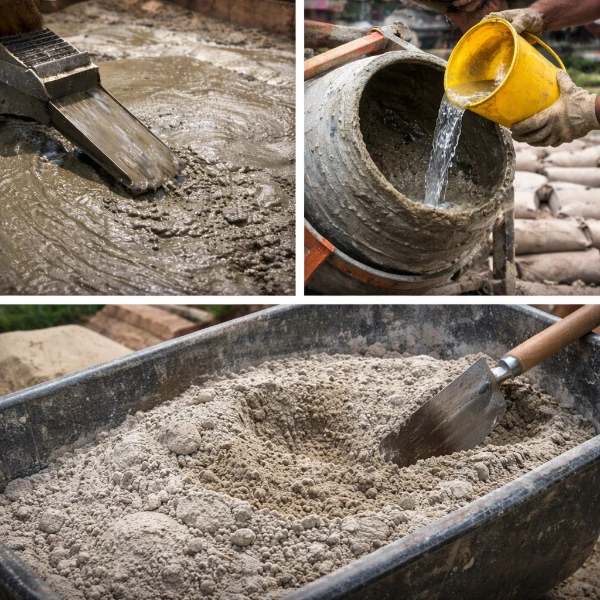
Concrete is not a one-size-fits-all material. The mix must be strong enough to handle vehicle loads while also resisting local climate conditions. Using too much water to make pouring easier is a common mistake that significantly weakens the final slab.
Key Concrete Mix Issues and Their Consequences
A poorly designed concrete mix directly affects the strength and lifespan of a driveway. When the mix is weak or improperly prepared, damage such as cracking and surface wear can appear within just a few years, far earlier than expected for a properly installed concrete driveway.
| Concrete Mix Issue | What It Means | Impact on the Driveway |
|---|---|---|
| Low PSI Strength | Concrete does not meet the required compressive strength for vehicle loads | Leads to early cracking, surface breakdown, and reduced load-bearing capacity |
| Excess Water Content | Too much water added to make the mix easier to pour | Weakens the concrete, causes surface scaling, and increases shrinkage cracks |
| No Climate-Specific Additives | Mix lacks additives suited for local weather conditions | Makes concrete more vulnerable to temperature changes, moisture damage, and premature wear |
Improper Reinforcement or No Reinforcement
The Role of Reinforcement in Concrete Driveways
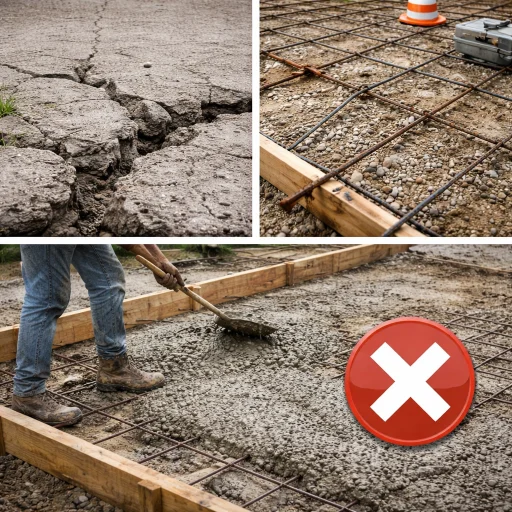
Reinforcement helps control cracking and increases the driveway’s ability to support weight. Without it, concrete is far more likely to crack under daily vehicle use.
Common Reinforcement Mistakes
Some homeowners skip reinforcement entirely, while others use it incorrectly. Reinforcement placed too low in the slab provides little benefit and fails to prevent cracking.
Effective reinforcement options include: Steel rebar grids, Wire mesh, and Fiber-reinforced concrete.
Ignoring Control Joints
How Control Joints Prevent Random Cracking
Concrete naturally expands and contracts as it cures. Control joints guide cracking into straight, planned lines that preserve the driveway’s appearance and structure.
Problems Caused by Poor Joint Placement
When control joints are missing or improperly spaced, cracks form randomly across the surface, making repairs difficult and unattractive.
| Driveway Width | Ideal Joint Spacing |
|---|---|
| 10–12 feet | 8–10 feet |
| 12–16 feet | 10–12 feet |
Poor Finishing Techniques
Why Finishing Requires Skill and Timing
Concrete finishing is not just about appearance, it directly affects durability and safety. Finishing too early traps moisture, while finishing too late makes the surface weak and uneven.
Common Finishing Issues
Improper finishing can result in flaking, slippery surfaces, or uneven texture that becomes more noticeable over time.
- Broom finish for traction
- Smooth finish for decorative areas
- Uniform texture for durability
Rushing the Curing Process
What Proper Curing Really Means
Curing allows concrete to gain strength gradually. Rushing this process weakens the slab and shortens its lifespan. Many homeowners underestimate how important curing is to long-term performance.
Recommended Curing Timeline
| Activity | Minimum Time |
|---|---|
| Foot traffic | 24–48 hours |
| Vehicle traffic | 7 days |
| Full strength | 28 days |
Driving on concrete too soon often leads to surface damage that cannot be repaired.
Skipping Sealing and Long-Term Protection
Why Sealing Should Never Be Skipped
Sealing protects concrete from moisture penetration, oil stains, and surface wear. Without a sealer, the driveway becomes more vulnerable to cracking and discoloration over time.
Long-Term Benefits of Sealing
A properly sealed driveway lasts longer, looks better, and requires fewer repairs.
Best sealing practices include:
- Sealing after full curing
- Reapplying every 2–3 years
- Using professional-grade sealers
Hiring the Wrong Contractor
The Most Costly Mistake Homeowners Make
Hiring an unlicensed or inexperienced contractor often results in shortcuts, poor materials, and no accountability. While cheaper upfront, these jobs usually cost more in repairs later.
How to Choose the Right Contractor
Look for local experience, proper licensing, insurance, and a clear warranty. A professional contractor follows industry standards and local regulations.
Final Remarks
Installing a concrete driveway requires more than pouring concrete. Proper planning, correct materials, skilled workmanship, and patience during curing all play critical roles. By avoiding these common mistakes, homeowners can ensure their driveway remains strong, functional, and visually appealing for decades. Investing in professional installation from the start is the smartest way to protect your property and your budget.